

Datadog-anmeldelse: Fordele, ulemper, funktioner og priser


Datadog is a big data customer analytics platform for teams that need real-time visibility into customer-facing application performance, user behavior, and infrastructure data at scale. It's worth considering if you're ingesting high volumes of data across distributed systems and need to correlate it in one place. If you've looked at Splunk, Datadog is faster to deploy and gives you a more visual, integrated experience without the heavy configuration overhead that Splunk typically demands.
Datadog Evaluation Summary
- From $5/month (billed annually)
- Free plan available and 14-day free trial
Why Trust Our Software Recommendations
Our team has been testing and reviewing software since 2012. As CX leaders ourselves, we know how difficult—and important—it is to choose the right software.
For this guide, we evaluated tools using hands-on testing and independent research, scoring tools using our selection criteria.
Our reviews reflect our human editorial judgment, not a sales pitch.
Datadog Overview
In my opinion, Datadog offers a solid platform for businesses needing a real-time analytics and monitoring service. Its standout features, like extensive integrations and an intuitive dashboard, make it a wise choice for tech-heavy industries. While its onboarding process could be smoother, the value it provides in terms of insights and operational efficiency is significant.
Datadog is best suited for IT departments, SRE (Site Reliability Engineering) groups, and DevOps teams that require detailed analytics to optimize infrastructure and application performance monitoring (APM). Compared to competitors like New Relic, Dynatrace, and Splunk, it excels in user interface and data visualization but may fall short in user-friendliness for non-technical teams. If you're looking to choose a reliable monitoring tool. Datadog deserves consideration for its comprehensive observability suite.
pros
-
Real-time monitoring for immediate insights into your workload.
-
The user interface is intuitive and easy to navigate.
-
Extensive customization for dashboards, automation, and alerts.
cons
-
The onboarding process can be complex for first-time users.
-
Steep learning curve for non-technical teams or a junior software engineer.
-
Customer support response times are slow, especially for new features.
-

SupportYourApp
Visit WebsiteThis rating combines scores from multiple user review sites to reflect overall customer sentiment about the product.4.7 -

Freshdesk
Visit WebsiteThis rating combines scores from multiple user review sites to reflect overall customer sentiment about the product.4.4 -

Hiver
Visit WebsiteThis rating combines scores from multiple user review sites to reflect overall customer sentiment about the product.4.7


Core Features
Real-Time Monitoring and Observability: Datadog lets you track your infrastructure and applications in real-time, providing instant insights into performance across cloud providers like AWS, Azure, and Kubernetes clusters. This feature helps your team quickly identify and resolve issues and reduce downtime.
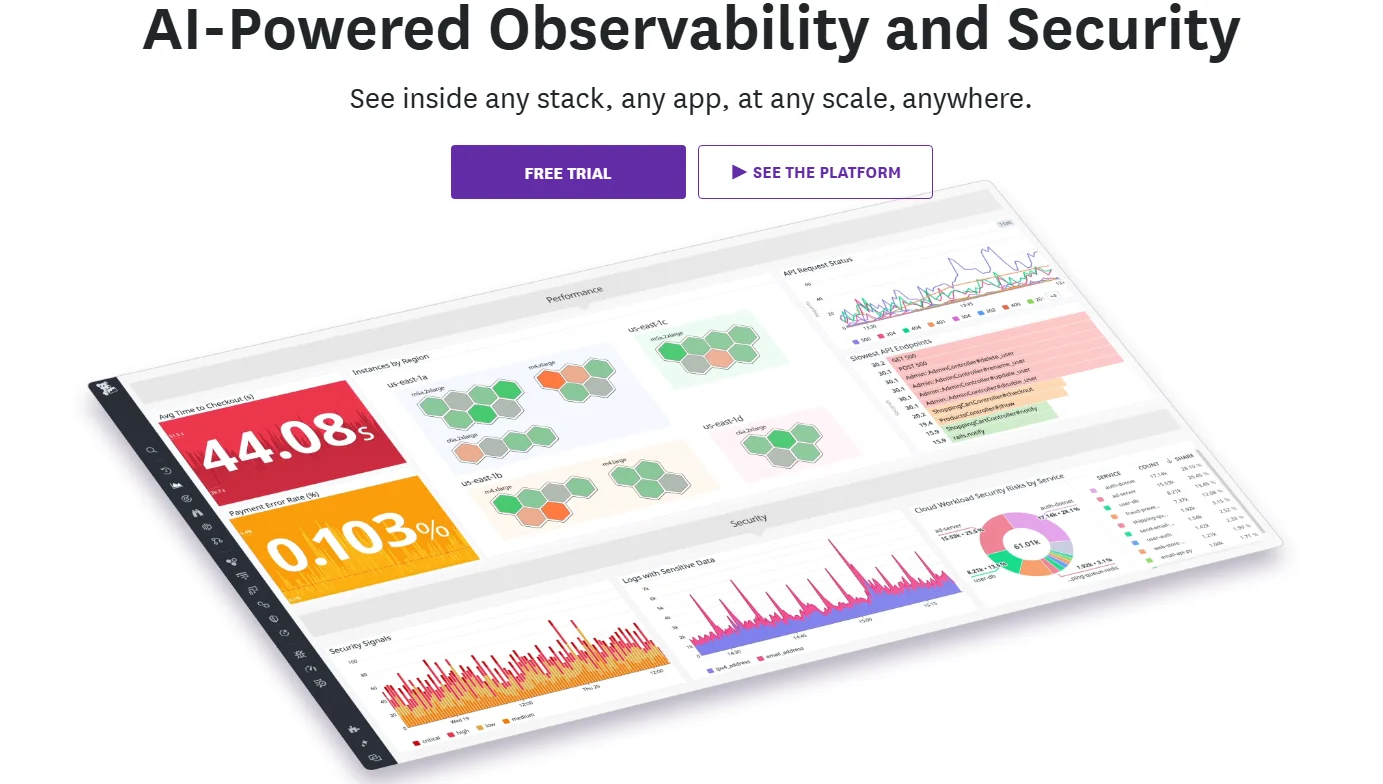
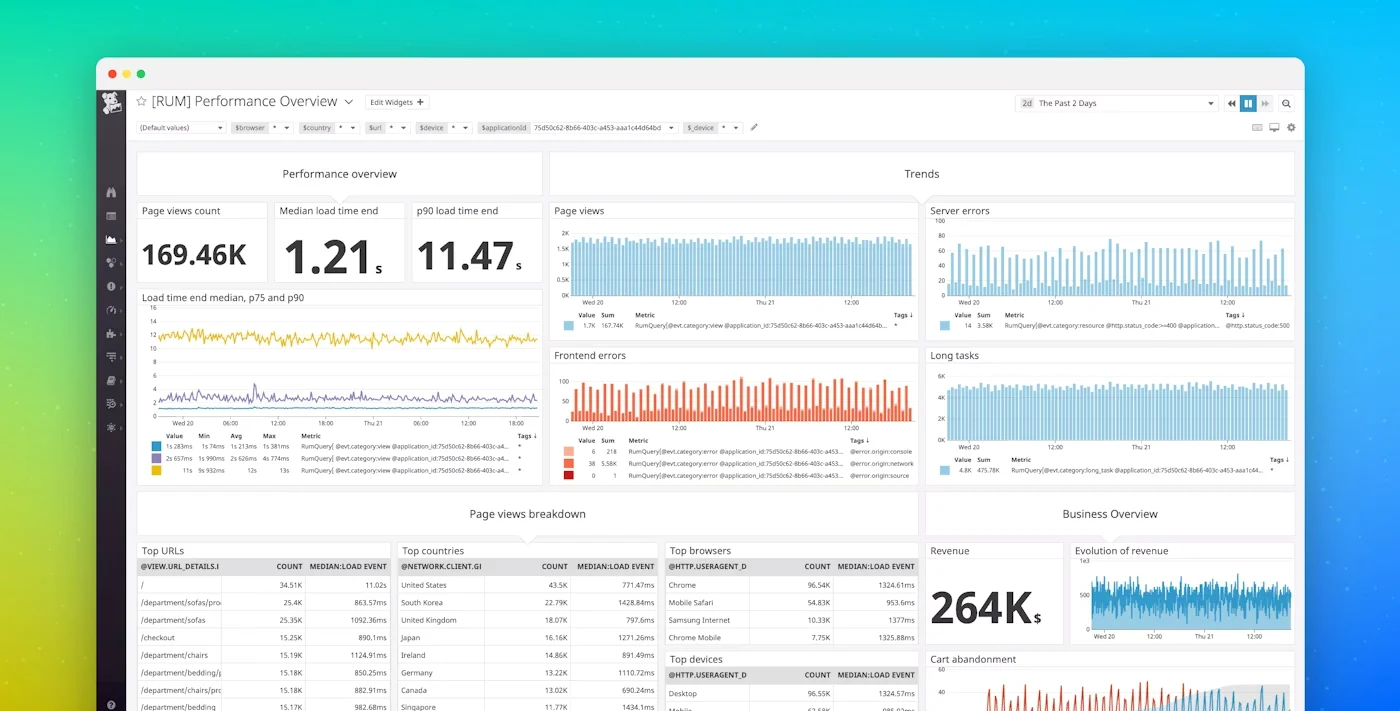
Custom Dashboards: You can create personalized dashboards to view the metrics that matter most to your work, including custom metrics from your applications. This flexibility allows you to focus on specific data points, visualize data through graphs, and share insights with DevOps and SRE teams.
Alerts and Notifications: Datadog offers customizable alerts to notify your team of potential issues before they escalate into downtime. You can set thresholds, create workflows to receive timely notifications through Slack, email, and other integrations.
Data Visualization: With Datadog's visualization tools, you can see your data in clear, interactive graphs and dashboards. This makes it easier for your team, including software engineers and DevOps professionals, to understand complex metrics and identify bottlenecks.
Log Management: Datadog's log management feature lets you collect, search, and analyze logs from all your systems, including Linux, Windows, containers, and cloud services. It helps your team troubleshoot to optimize performance.
Infrastructure Monitoring: You can monitor your entire IT infrastructure from a single platform, including servers, containers, Kubernetes clusters, databases, and network devices. This comprehensive observability aids in maintaining optimal system health.
Real User Monitoring (RUM): Datadog's real user monitoring (RUM) helps track actual user experience for web applications and mobile apps. You can monitor frontend performance, load times, user journeys, and identify issues affecting real users to optimize the user experience.
Ease of Use
Datadog offers a user-friendly interface that makes it easy for your team to navigate and customize dashboards for observability. While the initial setup can be complex, particularly for first-time users, the intuitive design helps you quickly access key features, metrics, and monitoring capabilities. Compared to other monitoring tool platforms like New Relic, Dynatrace, and Splunk, Datadog excels in providing clear data visualization through graphs and dashboards, plus real-time insights. However, your team might find the learning curve steep if they're not technically inclined or lack experience with observability concepts, APM traces, or log management. But the platform's flexibility ultimately enhances usability for those who invest the time to learn its methodology.

Integrations
Datadog integrates with Slack, AWS, Azure, PagerDuty, GitLab, GitHub, Google Cloud, Salesforce, Zendesk, and Jira. Datadog supports Kubernetes, Docker, Linux, Windows, and major databases.
Datadog also has an API and connects with third-party integration tools, enabling custom workflows and automation. With 600+ integrations, Datadog provides comprehensive observability across your entire technology stack.

Datadog Specs
- AI Integration
- API
- Automated Testing
- Browser Compatibility Testing
- Bug Tracking
- Code Review
- Custom Reports
- Data Export
- Data Import
- Developer Tools
- External Integrations
- Malware Protection
- Multi-User
- Notifications
- Performance Testing
- Process Reporting
- Static Analysis
- Status Notifications
- Workflow Management